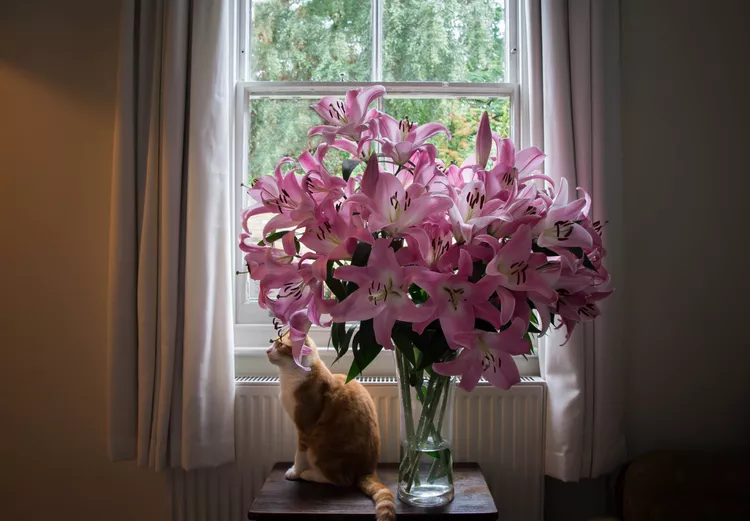
Lilies are sometimes grown in the garden or as houseplants, but the most common presentation is in floral arrangements, especially around Easter and Mother’s Day. If you have cats and you love lilies, be careful, because they are extremely poisonous to cats. The entire plant is toxic to cats, thus just one bite can make your cat very sick, and if they are not treated within a reasonable amount of time, death may occur. Unfortunately, there is no antidote for lily toxicity, and treatment is not always effective, so it is important to know as much as possible about this plant and the effects you may see if your cat is exposed to it.
Warning
If you think your cat has ingested a lily plant, this is a life-threatening emergency. Seek veterinary care immediately and have your veterinarian contact an animal poison control center.
What Is Lily Toxicity?
The exact nature of the lily toxin is unknown, but all parts of the lily plant are harmful to cats. The most dangerous and potentially fatal lilies for cats are found in the genus Lilium and Hemerocallis, but there are other varieties that are harmful as well. If you have a cat, we recommend keeping these plants out of your home, and if your cat goes outdoors, out of your garden as well:
- Asiatic lily
- Day lily
- Easter lily
- Peace lily
- Japanese show lily
- Rubrum lily
- Stargazer lily
- Tiger lily
- Wood lily
- Lily of the valley
Symptoms of Lily Toxicity in Cats
If you have a bouquet of lilies in your home or grow lilies in the garden, be alert to any sign that your cat has licked or eaten the plant, such as sudden lethargy or vomiting. If this occurs, look to see if you can spot any obvious bite marks or other indications that your cat has eaten any part of the lily's petals or leaves.
The first signs of lily toxicity in a cat may be seen as early as two hours. In the beginning, you may notice lethargy (low energy level), a loss of appetite, and vomiting. As the condition progresses, tremors and seizures may occur. Prolonged exposure to this toxin will result in dehydration, renal failure, and death if left untreated. Lily of the valley is a little different in that it does not cause renal failure but may cause heart failure.
Cause of Lily Toxicity
Your cat doesn't have to eat an entire lily plant to become sick. In fact, as little as a nibble or two of a leaf or flower petal can harm your cat, as can licking bits of pollen off the plant, table, or the cat's own fur, or even drinking water out of the flower vase containing the lilies.
Diagnosing Lily Toxicity in Cats
Your veterinarian will diagnose lily toxicity based on your cat's assumed ingestion of any part of a lily plant, combined with symptoms. Along with a full physical examination, your vet may want to run blood tests to determine if there has been damage to the cat's kidneys.
Treatment
If you suspect your cat has ingested any part of a lily plant, even if there may have been a possible exposure to the pollen, seek veterinary attention immediately. If your regular animal clinic is closed, contact the nearest emergency hospital. It will be helpful if you know which lily the cat was exposed to and the amount it consumed. You may be asked to contact animal poison control, so have their information handy.
The earlier you bring your cat in for treatment, the best chance it has for survival. If you know that it's only been a very short time since your cat ingested the lily, the vet might induce vomiting to remove as much toxin from the stomach as possible. Or your veterinarian may perform a procedure known as decontamination. Your cat will be given a thick oral liquid—often containing activated charcoal—that will bind to the toxins and move them out of the body through the gastrointestinal tract. Aggressive fluid therapy initiated within 24 hours of ingestion may prevent anuric renal failure, where the kidneys stop producing urine. In more severe cases, dialysis is the only effective treatment. Be prepared for your cat to be hospitalized for several days.
Prognosis for Cats With Lily Toxicity
Ultimately, your cat's prognosis depends on how much lily has been consumed, the cat's general state of health, and the length of time since the lily ingestion. As a general rule, if more than 18 hours pass without treatment, the prognosis is poor. However, many cats recover if treated promptly.
How to Prevent Lily Toxicity
The best way to keep your feline friend safe is to keep these plants out of your home and yard. But if you find that your cat has already helped itself to the lily in your flower arrangement, seek veterinary attention immediately. Just remember, the sooner the problem is identified and treatment is initiated, the better your cat's chance of survival.
Safer Flowers
If you want to find a safer option than lilies, here are a few that will not cause harm to your cat and will look beautiful in a floral arrangement.
- Blue daisy
- Marigold
- Gloxinia
- Sunflower
- Camelia
- Nasturtium
- Rose
- Impatiens
- Canna
- Persian violet
- Snapdragon
- Viola
- Gerber daisy
- Petunia
- Star jasmine
- Zinnia